

The Elements of Chowder
How it took 3000 years of maritime history and the creative cooking of some pretty salty sailors to get us that fragrant bowl of chowdah.

I’m headed to Boston soon, which means that I will be eating as much chowder as I possibly can. I love chowder. For one thing, it’s delicious. But as a culinary history buff, I really really love the very antiquity of the dish. It’s not just a regional New England specialty or a fish-restaurant special: chowder has about a deep a history as you can get, going back to the ancient seafaring cultures of the Mediterranean. I know, right? The thing is that chowder is in itself a pretty old recipe- but it’s also based on 5 elements that harken back to the early seagoing cultures of ancient Phoenicia and Egypt, the Roman Empire, and the European middle ages. These elements came together during Age of Sail, the era beginning in the 16th century when life aboard ship developed a unique and special culture. And they came together to make… a bowl of chowder. Here’s the story.
Bread of the sea: the Ship’s Biscuit
About as soon as humans began exploring the sea, they were faced with a problem: how does a crew stay nourished on a long sea voyage? In the ancient Mediterranean, the problem was bread: flat, baked wheat-based breads were the main foodstuff at the time, but as we all know, bread can grow moldy and inedible within just a few days. The answer was pretty straightforward: since mold requires moisture to thrive, small loaves of bread could be baked extra-long to eliminate all moisture, effectively preserving them indefinitely. Rather than baking quickly in a hot oven to make pliable bread, a cooler, slower oven produced a super hard, bone-dry bread that, if kept away from water, would remain edible for months on board a ship. The ancient Phoenicians used such a bread on their many sailing voyages and likely taught the Egyptians, who called it dhourra. Romans learned to make it too: they called it bucellatum and it became a staple of the Roman military. In the middle ages, another Latin word was used to describe ship’s bread: biscoctum, meaning “double baked”. This word entered the English language as “biscuit”.
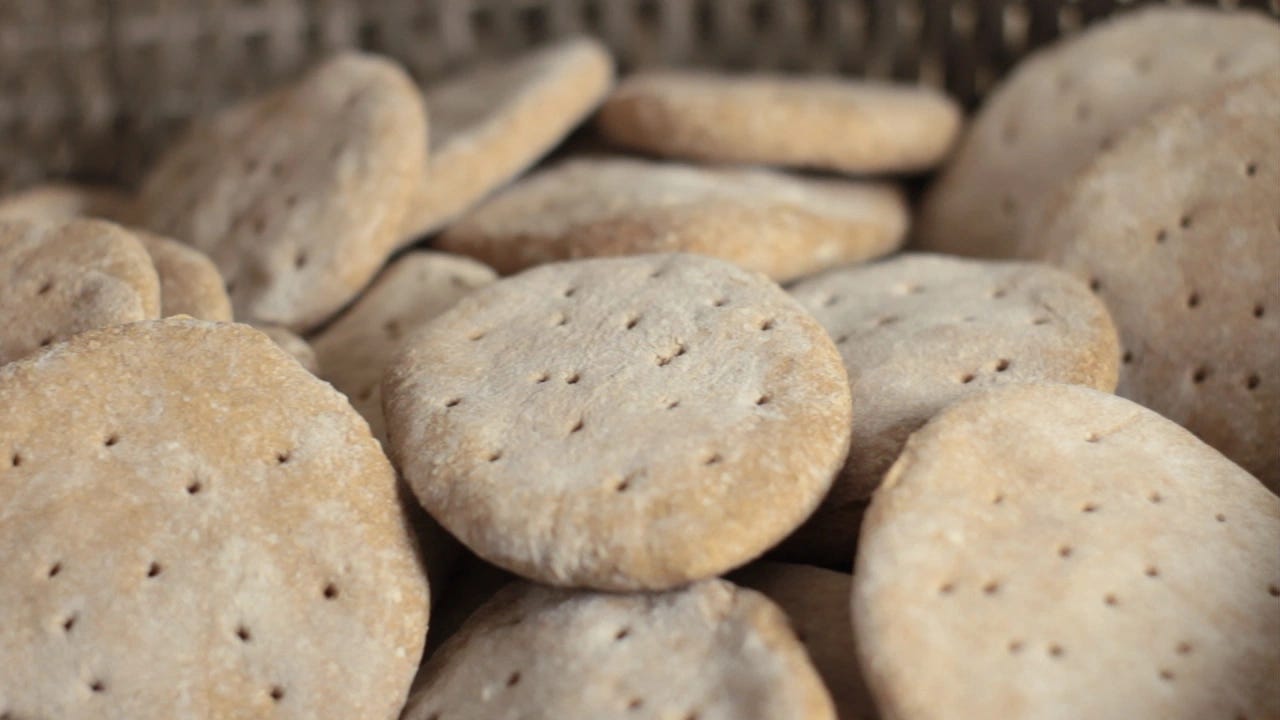
“Ship’s biscuit”, also known as “hardtack”, “pilot bread” or “ship’s bread”, was such an effective method of preserving bread it became the primary food of sailors for over a thousand years, from the ancient Mediterranean to the European age of sail. The standard biscuit was a circular puck about four inches in diameter and baked hard as a rock, kept in sealed barrels on board and doled out to the crew daily. Sailors had to crush, soak, or even suck on the biscuit just to make it edible. By the age of sail, a ration of 1 pound of ship’s biscuit per day was expected: 1600 calories of dull, sturdy, bland nutrition. In the American colonies, rock-hard ship’s biscuits took on another name, a dig on the biscuit’s tooth-cracking reputation: they were called “crackers”. More on that later.
Yo-ho-ho, and a barrel of… Pork
Besides drying, the other ancient technique of food preservation was salting. Abundant salt ties up moisture in food, making it impervious to bacteria and mold. The ancient Egyptians learned that by coating meat in salt or immersing it in brine, it would be safe to eat for years- the salt could be rinsed off just before cooking and eating. This made salted meat a perfect choice for sailing ships where fresh meat might be unavailable for months.
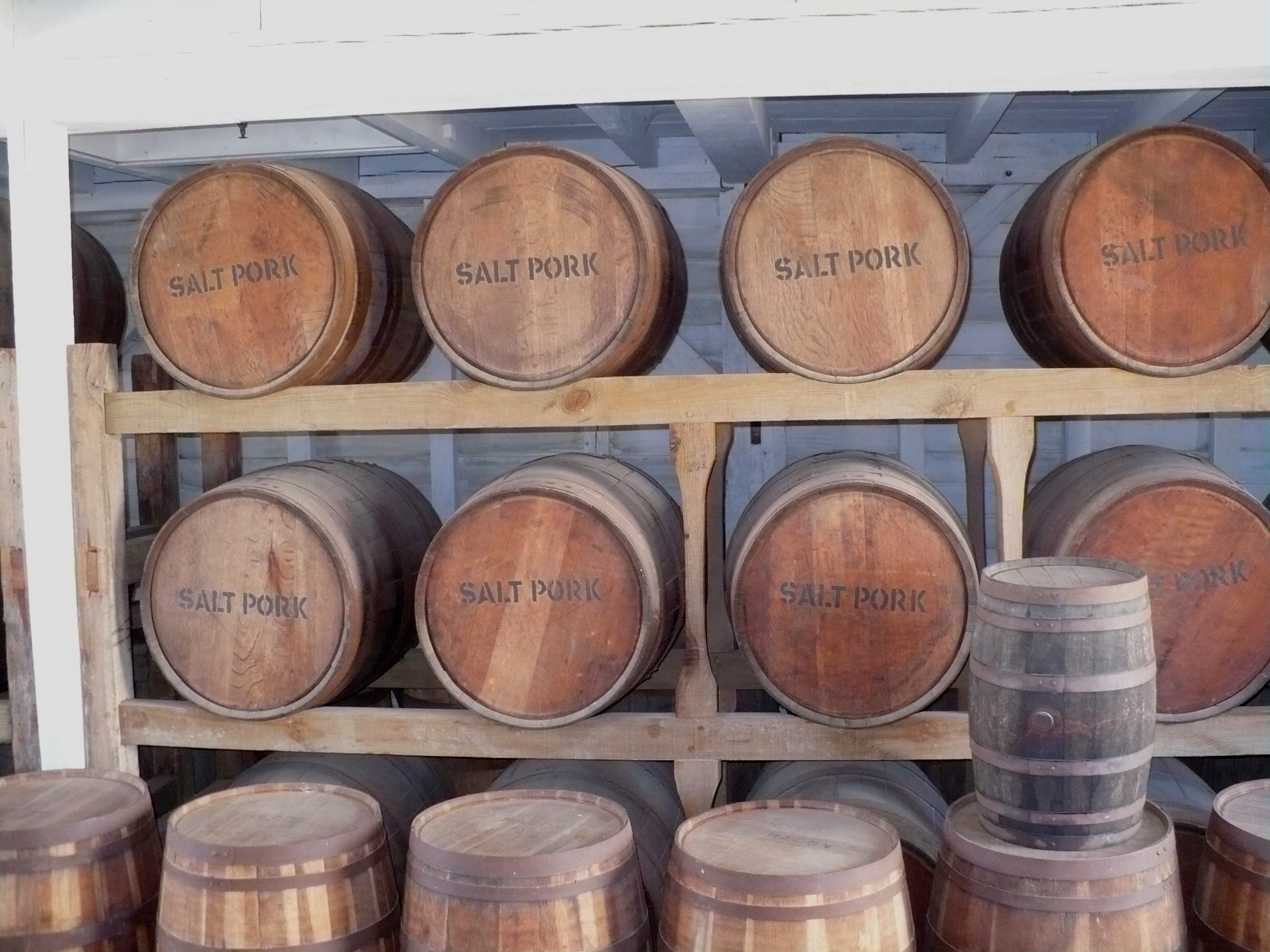
Salted meat had another benefit for sailors: it’s a nutrient-dense food, providing a relatively large amount of fat, protein, and calories per gram. This was a benefit aboard ship, where space was at a premium. As seagoing food-culture developed, barrels of salted beef and pork became standard features in the ship’s galley: chunks of meat packed in barrels of strong brine, rationed out to sailors daily. The meat was rinsed or soaked before eating, sometimes by putting it a net and washing in the (relatively less-salty) ocean. By the 1600s, a normal ration of meat- alternating between salt pork and salt beef- was about a pound per day, providing a thousand calories or so. Salt pork was the fattier of the two, and provided both protein and cooking grease to the ship’s cook.
Onions- a durable vegetable
Another ancient Mediterranean foodstuff was the onion. Although we think of onion now as a kind of flavoring agent, onions provided calories and vitamins as well as variety in a monotonous diet. And, when cured properly and kept in a dark place, onions could last a good long time in the hold of a ship. For this reason, onions were often kept on board sea voyages and were frequently used in cooking.
Of course, Seafood
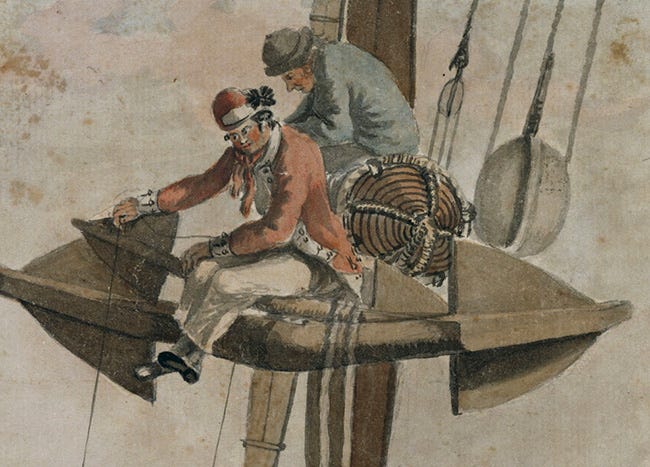
Sailing ships were outfitted with a trawling net that could be dragged behind the boat and used to haul fish from the sea, or sailors could spend time line-fishing from the deck. Alternatively, any time cargo ships were in port, crews eagerly traded for fresh fish and shellfish: some oysters, a haul of cod, or a bucket of sardines. Fishing boats had it even better- they were filling their holds with cod anyway, and snagging a fish or two for dinner was pretty straightforward. Alternatively, a quick trip to the beach with a shovel easily produced a pail of clams for variety.
And, finally, a pot to cook it in
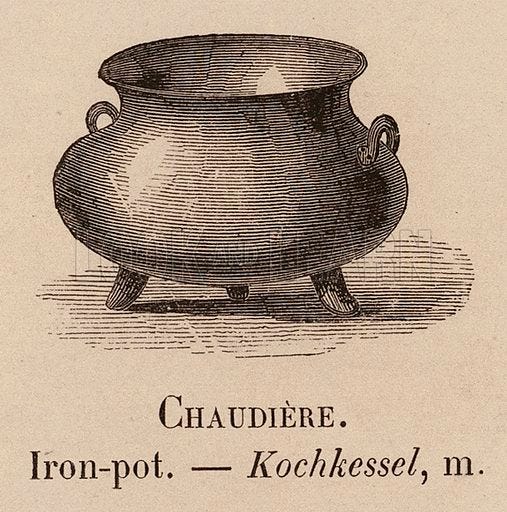
It’s hard to believe now, but sailors had no choice but to cook over a fire, even while at sea. Though boats were wooden and caulked with pitch- making them a bonfire waiting to happen- sailors made small fires aboard ship to cook their food. For this reason, cooking was tightly controlled on the ship, and done as rarely as possible. On a larger boat, a brick-lined galley reduced the fire danger somewhat, and the cook would use large cauldrons to cook in. Smaller ships had less space, of course, and a standard item for sailors was a small, three-legged portable cauldron made of iron. It had a narrow neck to conserve heat, legs that made it useable over coals, and a handle that made it possible to hang over an open fire. The ancient Romans called this a caccubus, but in the Middle Ages the word became caldarium meaning something like “hot pot”. In English this word became “cauldron”, while in French it became chaudière.
Ok: now we have our five elements of seagoing cuisine: ship’s biscuit, salt pork, onions, seafood, and a cauldron. By the late middle ages, sailors were cooking these ingredients together in their iron pots. By the 18th century, French crews on fishing boats in Newfoundland and Nova Scotia had given the dish a French name: they nicknamed it “chaudière”, their word for cauldron, and the name entered English as… chowder.
During this era, recipes for chowder always went something like this: fry some salt pork in the bottom of a cauldron, then add cut-up onions. When the onions were partially cooked, add layers of fish or clams and crushed ship’s biscuit, alternating until the cauldron was almost full. Finally, fill the whole thing with water, season, and let cook until done. The ship’s biscuit would disintegrate, making a very thick, white stew, filled with morsels of fish, clams, salt pork, and onions. This was chaudière- “chowder”- and recipe-books of the era describe it with mouth-watering fondness. The stew became very popular in seafaring communities of the Northeast Atlantic coast, and it became a favorite onshore as well as aboard. The seagoing tale Moby Dick contains an entire chapter called “Chowder”, which includes this description of the dish:
”Oh, sweet friends! hearken to me. It was made of small juicy clams, scarcely bigger than hazel nuts, mixed with pounded ship biscuit, and salted pork cut up into little flakes; the whole enriched with butter, and plentifully seasoned with pepper and salt. Our appetites being sharpened by the frosty voyage, and in particular, Queequeg seeing his favourite fishing food before him, and the chowder being surpassingly excellent, we despatched it with great expedition: when leaning back a moment and bethinking me of Mrs. Hussey’s clam and cod announcement, I thought I would try a little experiment. Stepping to the kitchen door, I uttered the word “cod” with great emphasis, and resumed my seat. In a few moments the savoury steam came forth again, but with a different flavor, and in good time a fine cod-chowder was placed before us.”
This sounds amazing, but it is not exactly today’s chowder. Like all foods, chowder underwent a transformation in the 19th century, as ingredients became more available, incomes increased, and tastes regionalized. So it was with chowder. For one thing, ship’s biscuit- known as a tooth-shattering “crackers”- evolved into a gentler, more edible thing. Bakers made lighter, softer crackers, not suitable for long ship’s voyages but a lot more edible. They often added a bit of shortening to add flavor and make the cracker airier, crunchier, and chewable. The result was the New England “common cracker” or “Boston cracker”, a staple for snacking and thickening soups in the region. This cracker was the one that was sold in barrels all over the country, and led to descendants the “saltine” or “soda cracker”, and most of all the “oyster cracker”, which look like miniature versions of ship’s biscuits and are today an essential companion to any bowl of chowder.
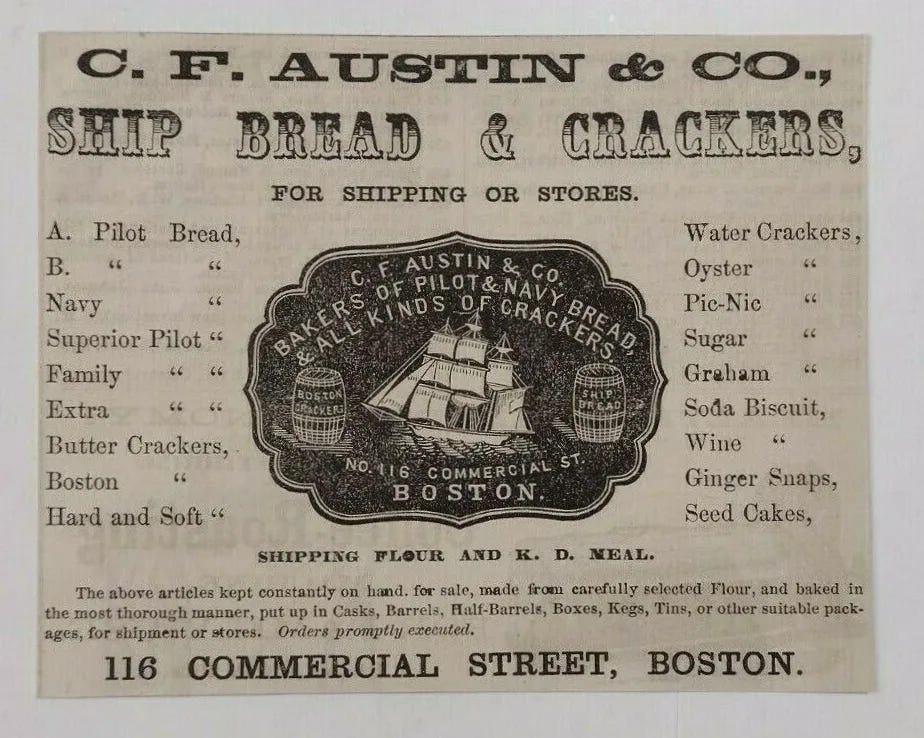
As for salt-pork, we don’t get it barrels any longer, but we eat it all the time: Americans love bacon, a smoked and salted cut of pork belly that is directly descended from old-time brined salt pork. Unsmoked Italian pancetta and British bacon both have a similar history. Any of these can be used to make chowder, but American smoked bacon is the most common. Potatoes became added to chowder along the way, which are a perfect addition: their hardy starchiness is similar to the texture of soaked biscuit, and their flavor is a worthy addition to the stew.
Speaking of ship’s biscuit, it’s hardly ever used in chowder recipes any more. Recipes tend to use a flour-based roux instead, which is easier and more available, and offers a similar thickening effect. There are traditionalists, however: Boston resident Julia Child insisted on using crackers instead of flour in her chowders. I’ve done it myself to great success. The biggest echo of ship’s biscuit in modern chowders is the universal practice of serving small, round “oyster crackers” as a garnish with every bowl of chowder. Experienced chowder eaters immediately dump their oyster crackers into the soup, thickening it and adding texture. It is the best and loveliest thing in the world- Queequeg would approve.
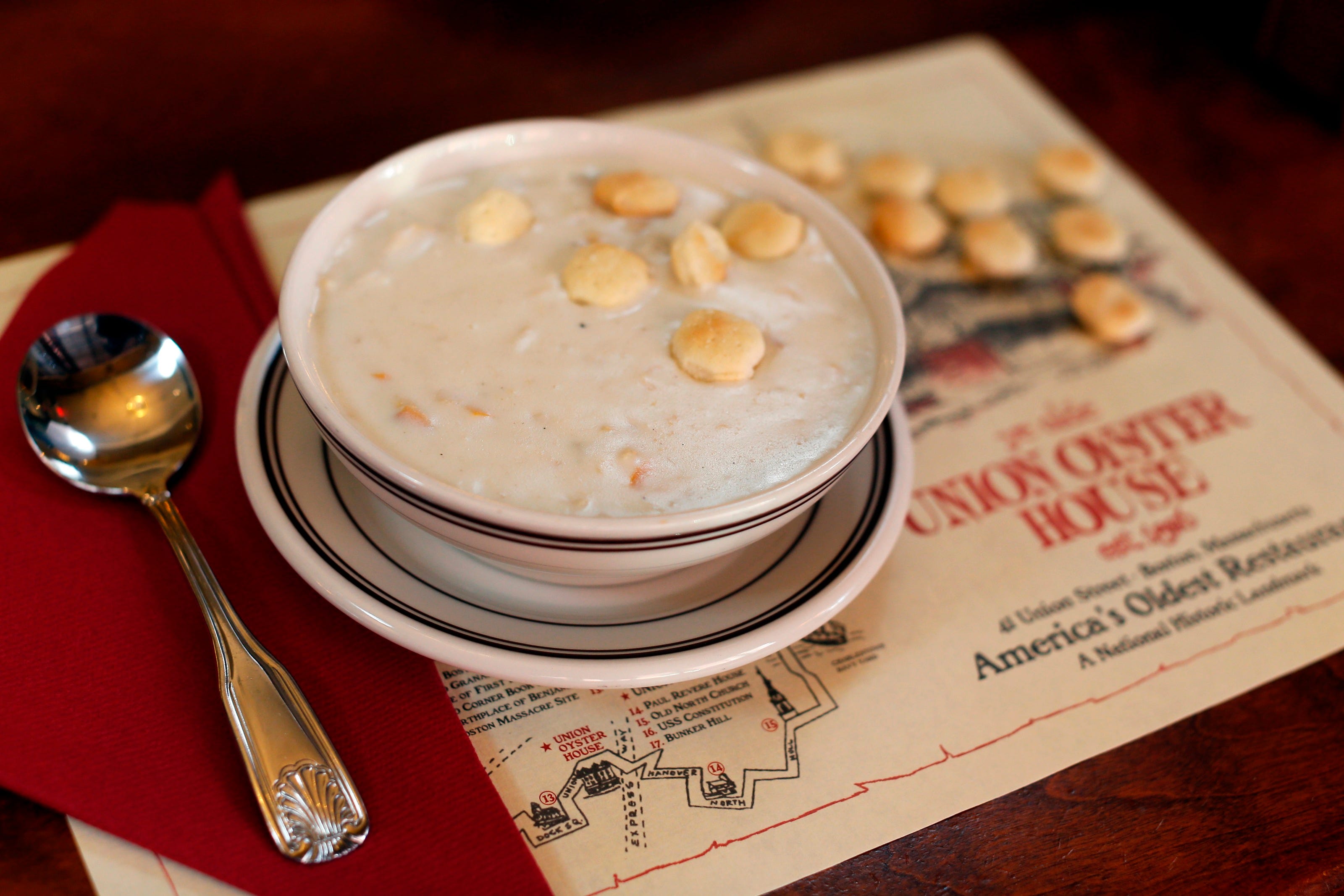
These days, chowder recipes are highly regionalized. Nova Scotia in Canada is partial to fish and lobster chowders, and even has a “chowder trail”, a network of restaurants famous for their chowder. The Northeastern U.S. states- known as “New England” to Americans- are famous for their clam chowder (pronounced “chowdah” in the local accent), and somewhere along the way they started to add milk to the recipe. This makes sense, since ship’s biscuit-based chowder was pale-colored anyway; milk adds richness and flavor to the stew. Nowadays, “New England” or “Boston” style chowder always contains milk or cream. Boston’s Union Oyster House, America’s oldest continuously operating restaurant, serves both fish and clam chowder, and might be considered the epitome of the Boston style. The White Horse Tavern, America’s oldest non-continuously operating restaurant, also serves New England-style chowder. It seems one can hardly be a historic restaurant without serving chowder of some kind.
Rhode Island is home to a different tradition, which uses no cream or milk, resulting in a clear chowder, a nice change of pace. The other important chowder style is from New York, where Portuguese and Italian immigrants melded the chowder tradition with their own tomato-based fish stews. The result is “Manhattan-style” chowder, which contains no milk but lots of tomato and other vegetables, which is pushing the envelope of chowder if you ask me. However, my Sicilian-American father prefers it.
Ok. On to the recipes!
For the sake of this article, I decided to make a clam chowder according to the 18th and 19th century recipes I found. Herewith is my version of a
Historically Accurate Clam Chowder
1 pound live clams
3 ounces salt pork, diced
1 cup crushed crackers (“common” crackers, oyster crackers, or saltines)
1 small onion, diced
salt and pepper
about 2 cups wate
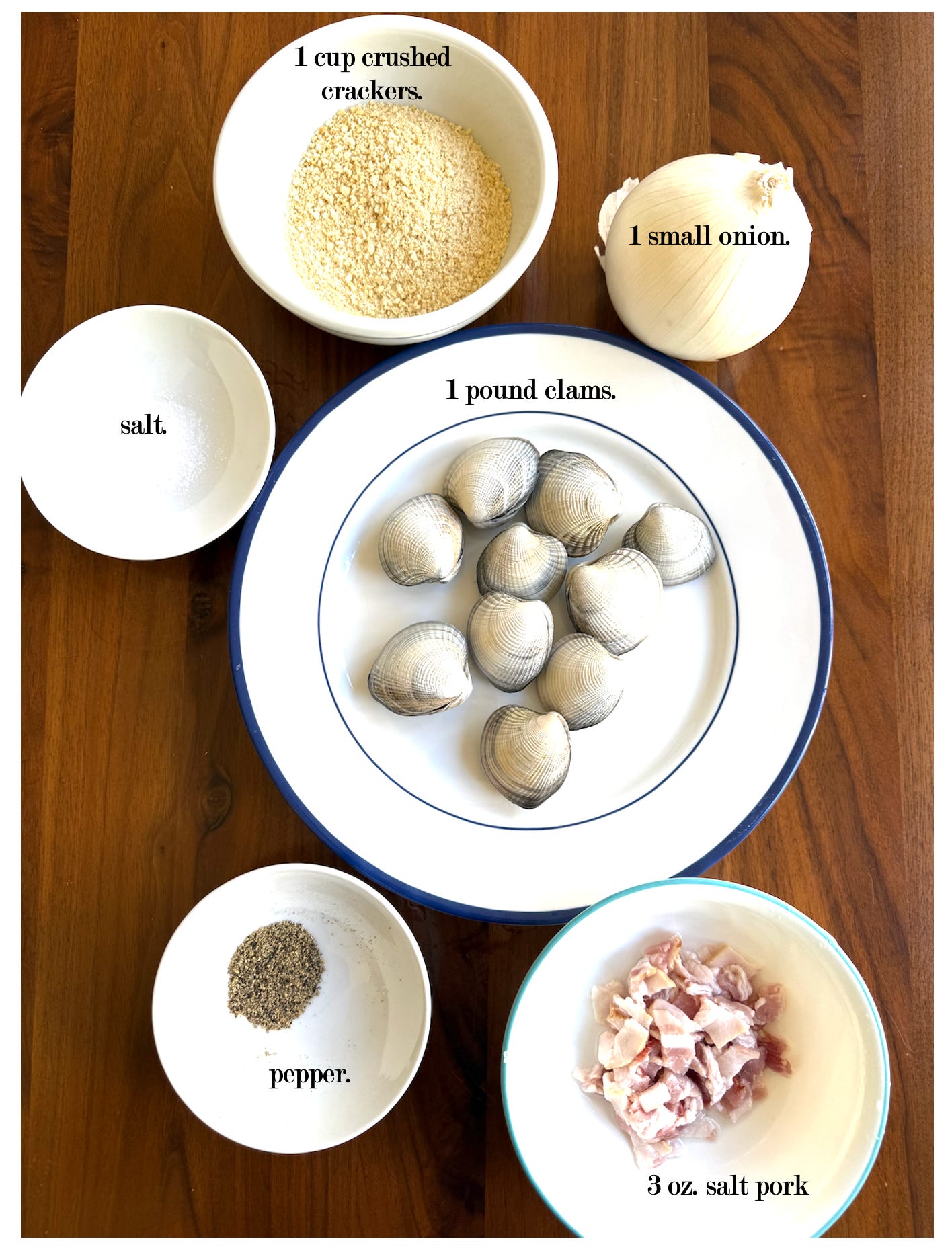
r
Once you’ve got some good live clams, bring them home and purge them. To do this, make a saltwater bath of about 2 tablespoons of salt per quart of water. Soak the clams in this water for 30 minutes to an hour or longer, this will clean them out of any sand or mud. Wash them thoroughly in fresh water.
In a pot (I don’t have an iron cauldron, so I used an enameled iron Dutch oven) sauté the salt pork until it gives up its fat and starts turning brown. Add the diced onion and cook until translucent. Add the pulverized crackers and stir to absorb the fat. Add about 2 cups of water. (at this point, many old recipes specify adding “sweet herbes”- I added only pepper but thyme, parsley, or bayleaf would be appropriate). Let the whole thing come to a boil, and the crackers will start to disintegrate.
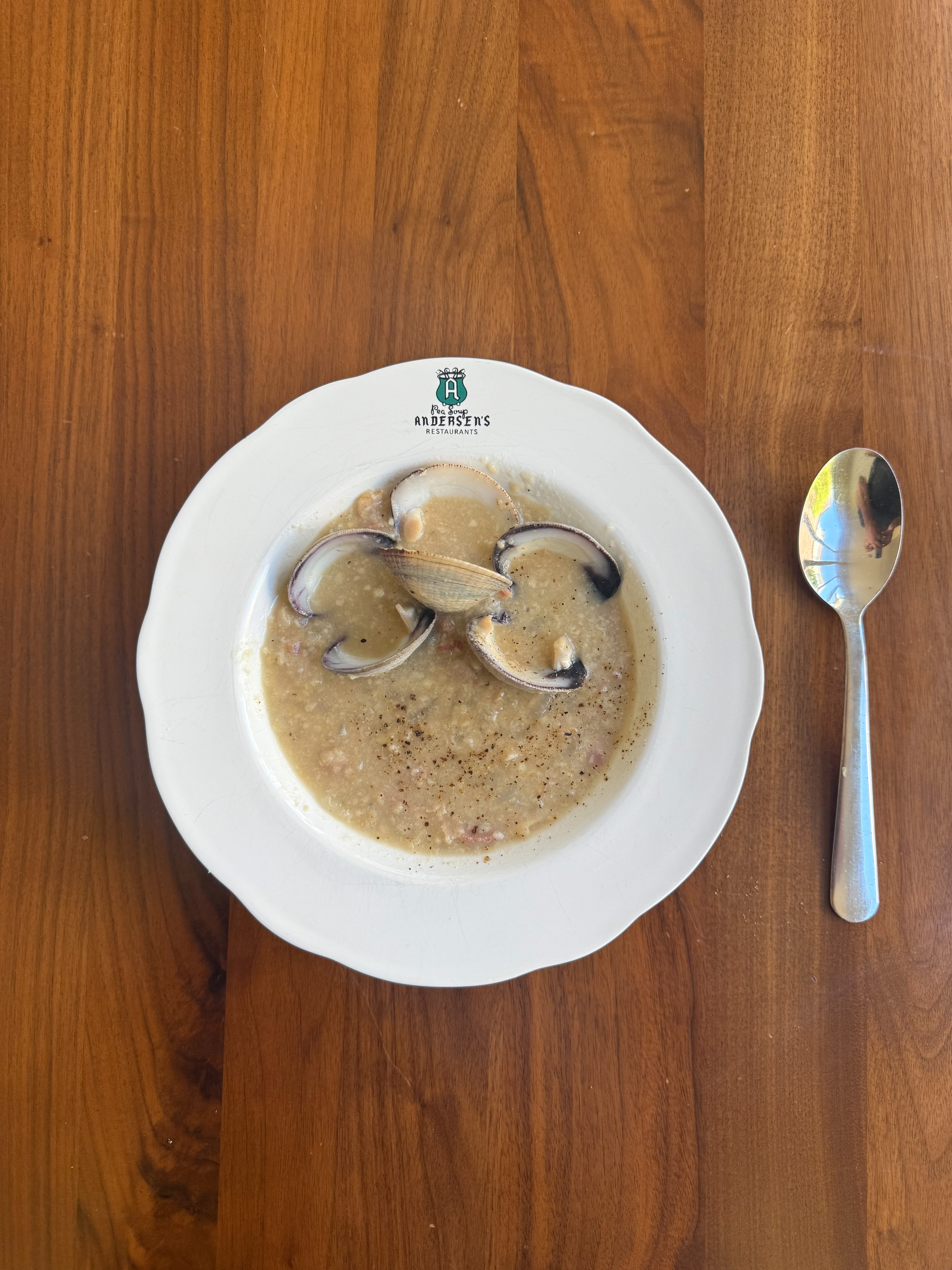
Add the clams to the pot, and cover tightly. After steaming for 4 minutes or so, the clams will begin to pop open. Remove them as they do, to a plate, making sure to let any liquid from the clams stay in the pot. Add salt and pepper to the chowder to taste- it will have become thick and fragrant.
You can either serve the chowder with the clams in their shells, or remove the clams and stir them into the stew (either chopping or leaving them whole).
I found this chowder delicious! I added a pat of butter (as some recipes specify) and the chowder was much improved.
Next up: contemporary chowder. I wind up making contemporary-style chowder at least a couple times a month, and it’s generally clam chowder. Pollock, haddock, and cod chowders are also delicious. Because I make it so often, I don’t really follow a recipe, but here’s my Clam Chowder guide anyway:
Clam Chowder
3 slices of bacon or 3 ounces salt pork, chopped into small squares (pancetta works here too)
2 ribs celery, diced
1 medium onion, diced
3 tablespoons flour -OR-
1/2 cup crushed oyster crackers
1 medium potato (russet or gold), diced
1 bay leaf
2 cups clam juice (reserved from when you steamed your clams, or bottled clam juice, or reserved juice from the canned clams. If you don’t have clam juice, seafood broth will do.)
About 1 1/2 cups of clams, canned, frozen or steamed and cleaned at home (canned or frozen clams are perfectly good to use in chowder. Steaming your own clams is fun, especially if you dig them yourself, but it’s a little bit of work)
1 cup milk or half-and-half
salt and (lots of) pepper
oyster crackers for garnish
If you’re using canned or frozen clams, skip this section and go straight to the bacon. If you’re steaming your own live clams, however, wash them thoroughly, purge them in clean salt water for at least 30 minutes, then add them to a pot with about an inch of boiling water and cover. After about 3-4 minutes, the clams will start to pop open. Remove them as they do. When they’ve all opened, remove the meat from each shell, and chop coarsely. Make sure you reserve all the liquid from the shells and the steaming liquid- this is your clam juice.
Saute the bacon. Once it releases its oil and barely starts to brown, add the onion and celery. Cook until they start to become translucent. Add the flour or crackers and stir until they’ve absorbed the fat. Add the clam juice and bay leaf and continue to stir. Add the diced potatoes, and set to simmer until they are tender, about 15 minutes. When they are ready, turn off the heat and add the milk and chopped clam meat. Never boil again after this point- it will make the clams tough. Add lots of pepper and a teensy bit of salt to taste. Serve hot with abundant oyster crackers and Tabasco sauce on the side.
p.s. I am aware that chowder is sometimes served in a hollowed out “bread bowl” which is fun but excessive in my view. I suspect this invention is a byproduct of the San Francisco sourdough industry. No hate, but I recommend sticking to a small, white bowl for chowder, a nod to New England restraint.
p.p.s. there is apparently a clam shortage at the moment, so live clams may be difficult to find. Though littleneck clams are considered the best for chowder, other sizes are fine, and razor clams make a delicious chowder. But, again, canned clams are perfectly good for this dish. Also, you might take the clam shortage as a sign to make fish chowder, which is less popular but very very delicious! Just substitute any fish broth for the clam juice and firm white fish for the clam meat, being careful not to overcook, and you’ll have a delicious chowder.
I’ve always thought of chowder as too heavy a stew for me. But have enjoyed it when offered. I’m really curious about the Rhode Island variety, which I’ve missed sampling all these years visiting my in-laws there. And nice Split Pea Andersen’s Easter egg. I’ve never had their chowder but if it’s anything like the Split Pea Soup, it’s amazing for sure.